This was a question I was asked recently, and it took me by surprise. As a profession company historian with 50+ books under my belt (well should I say in my bookcase) I just ‘do’ research. But, of course, if you have never written a business book before it’s totally logical that you haven’t researched a book before either. And here’s the rub. Most business book authors, whether they are self publishing or have secured a traditional publishing deal, probably haven’t ever researched a book.
And, in the age of AI, this question is even more relevant and important because using AI to do your research let alone your writing, simply isn’t going to deliver a high quality book, and there is no point aiming for anything less than the best quality you can write.
Here are my top 5 tips on how to research for writing a business book.
1. Interview a wide range of people in your topic area
While you have practical knowledge, experience and insights it is vital that you seek out and engage others in your area, or your clients/customers/suppliers to gain their perspectives and insights. You will learn a great deal and gain invaluable commentary and quotes that you can use in your book. Your book doesn’t have to be – in fact it should not be – all about you.
When you interview people record these conversations then transcribe them. Let the person you are interviewing know that you won’t quote them without their approval and keep this promise.
I use Rev.com to transcribe the interviews I do. There’s lots of other tools but for the type of research and writing I do I find Rev.com the best in terms of the quality/speed nexus. Others are otter.ai, Read.ai. Firefiles….there’s tons of them. This said, I review and revise the transcripts as they invariably can’t pick up names, specific industry terms and descriptors, Australian (or NZ) place names, cities and towns and more.
2. Undertake online research
By this I don’t mean ChatGPT, Perplexity, Claude, Gemini and other Ai tools. Do the new equivalent of ‘desk research’ which is desktop research. For any new company history I start I spend days researching online to see what I can find about the company. I delve deep into the Google search pages … sometimes running out of o’s in Gooooooogle. I head off in all directions when drilling down into various articles and links.
The point about this kind of research is to be really open minded about what you are searching for…which is the complete opposite of wanting to find something specific in a hurry. Research is about diving deep and wide not knowing quite where you might end up and usually it’s in the deep recesses of some obscure link that you might find the gems…or not.
This takes time, so make the time.
A tip for this is to create a new Bookmark in your Search tab and save every article/url you have found that’s relevant here. This will make it way easier to find the link later on.
Another tip is to create Folder in Google Drive called ‘Background Research’ and copy across any documents, PDFs to here, again so it’s easier to find when you need it.
3. Make the effort to do deeper research – offline research
As a company historian I am fortunate that I am given access to company archives (in various states of organisation or disarray). I spend hours, sometimes days looking through these archives and documents, just looking to see if there’s anything/something. Invariably there are documents, reports, letters, photographs, marketing material, random stuff that no one knows even exists. This to me is like finding treasure.
For you, offline research might look like going through your own actual filing cabinets of old documents, printed PowerPoints…all the ‘stuff’ you did before you were online, for everything. And, you might be surprised what your colleagues, board directors, advisers have kept. Have you ever asked them? Perhaps now is the time.
4. Read books, read everything
You knew this was coming.
I am sure that you have collected a number of books over the years and that they are either in a bookcase in your office, at home or both. Some you might have read, others might have been a bit more performative. (Really, how many of you have read Ray Dalio’s Principles? I have only made it a quarter of the way through, and that’s mostly because I read The Fund. Ray Dalio, Bridgewater Associates and the Unravelling of a Wall Street Legend, by Rob Copeland after which I stopped).
This said, in researching for your book, you probably need to reread some of the books that made an impact on you. And this time round I want you to use Post-it notes and tag the pages where there is information you might want to refer to in your book. Why? Because I have wasted hours if not days searching through books for ‘that quote’, ‘that paragraph’ that I know I want to use.
I now carry coloured tags with me. It’s either those or folding over the corner of the page, a practice I do not subscribe to but I do if I have forgotten my tags.
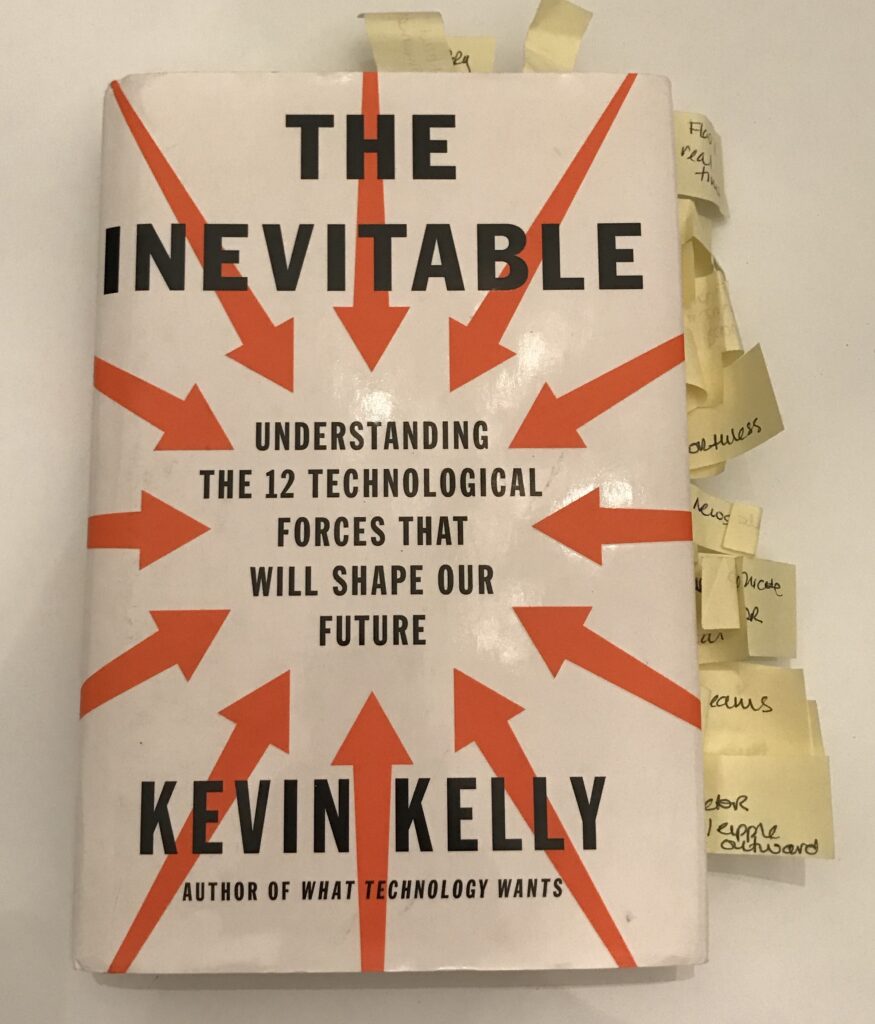
And reading books is really shorthand for read as much as you can around your topic, White papers, research papers, industry commentary and reports, Substack/Medium articles, LinkedIn articles, commentary from ‘the other side’….those who are critical of your sector/profession. Reading widely, just like interviewing people is a fundamental part of research as it helps you test your thinking, hones your ability to explain clearly your perspective, thoughts and approach. It’s about exploring deeply your area of expertise with genuine interest so that you can craft the best book you possibly can.
5. Set up a Google Drive/Teams/other platform folder titled Book Research
Create 4 sub folders: Interviews, Background Info, Manuscript, Marketing. You’re going to need all of these as part of your book research, writing, publishing and marketing. For research EVERYTHNG you do, search, everyone you talk to/interview should go into either Interviews or Background Info. If you set this up early you will save yourself hours/days of pain and grief when it comes to sitting down and starting to write your book.
Why ChatGPT and AI should not be your only research
As a writer I’ve used many research tools and continue to do so. When ChatGPT, Perplexity, Claude, Gemini and others came along I started exploring how they could assist in my research. And assist they do. BUT, they are not the sum total of my research. In fact, the seemingly ‘instant access’ to all knowledge and research that most of these AI tools proselytize about, is not quite so.
First up, they don’t know what YOU KNOW, have learnt, refined and thought about for years/decades. AI doesn’t ‘think’ the way you do about the very human elements that you bring to your thinking, your clients/customers. It doesn’t think, full stop. It might look like it does, but it doesn’t.
Secondly, it is merely regurgitating what exists on the internet. Nothing new, different, nuanced…just what exists now in written form that it’s been able to scrape.
Thirdly, AI can not access what it not on the internet, and that’s still a great deal. And this is where you, the human comes in. Absolutely use the AI tools to search and research, but know that this information – no matter how well it may be presented to you – is no substitute for wider, deeper and personal research.
Faster is not better when it comes to researching and writing a high-quality business book that makes a positive and meaningful contribution to the world.