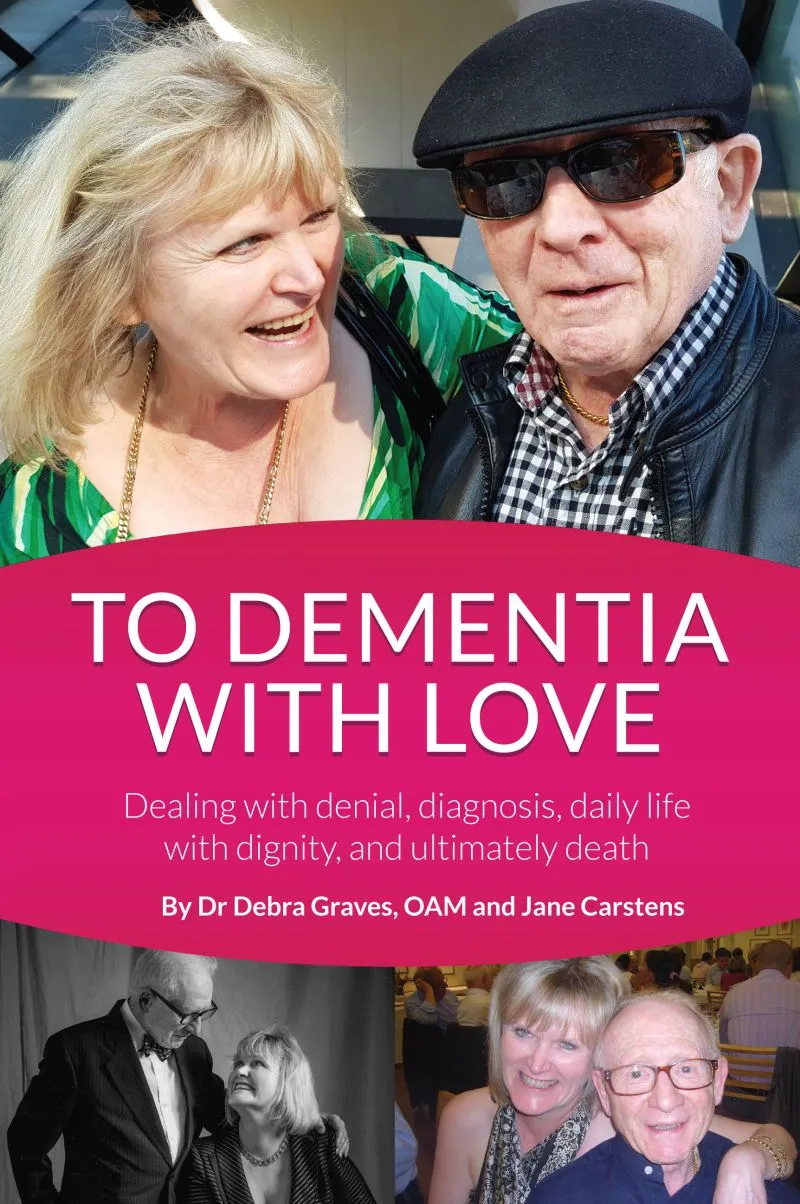
To Dementia With Love
A dementia diagnosis is frightening and challenging. There’s a wide and often conflicting range of options, opinions and advice. If you want to explore a different approach to dementia but are unsure about if and how you can, To Dementia With Love is for you.
To Dementia With Love shares how Debra cared for her husband Don, making her own rules to suit their evolving situation. Their story will show you how you can personalise your own dementia care pathway and do it on your terms. There is no rule book!
For almost nine years Debra (who has a medical degree) found navigating Don’s dementia diagnosis and increasing care needs challenging. Debra’s determination to care for Don at home and to continue their pre-dementia life – which included a lot of travel – was an unconventional approach that came with fear, uncertainty, and often exhaustion. But she would not have done it any other way knowing that the Don she loved was ‘still in there’, and that it was the best pathway for their situation.
$29.95 inc GST
REVIEWS FOR To Dementia With Love
Explore To Dementia With Love
A dementia diagnosis is frightening and challenging. There’s a wide and often conflicting range of options, opinions and advice. If you want to explore a different approach to dementia but are unsure about if and how you can, To Dementia With Love is for you. To Dementia With Love shares how Debra cared for her husband Don, making her own rules to suit their evolving situation. Their story will show you how you can personalise your own dementia care pathway and…
CHAPTERS
Captain of his own destiny
Don’s story
I'm losing it
The first signs of dementia. How Don was probably the first to know and then, gradually changes became more obvious
A is for Ageing
How other medical issues masked, by choice or not, the early stages of dementia. Other medical conditions give everyone an excuse not to think about dementia
The flags are getting redder
More people start to notice changes in Don, but are reluctant to raise their concerns. How communicating with family is important when dealing with dementia.
S is for Stroke
How other medical conditions often take over from following up on dementia.
D is for Denial and Dementia
Don’s cognitive decline slows…so maybe it’s not really dementia. Denial is a common way many deal with the potential of a dementia diagnosis, both the person with it and their loved ones.
She needs help and full time carers
How to navigate what help you need– how, where and when. And, it will also depend on the support you can access and can afford.
Facing up to reality
Understanding the progress of dementia so you can plan ahead…and plan to do the things you want to do. This will be different for everyone but there are options.
Things are getting serious and decline steeper
The progression towards death. What support you and the person you love need, the importance of not shutting down and accepting help. Staying focused on every day.
Thanks for a wonderful life
Remembering Don and the the life Debra had with him and his family.